
What Truly Makes This Blog Special - Mistakes!
Part 4 of 4
Author: Ian Vance, Intern with Arlington Artists Academy at Gallery Clarendon.
Hello again, readers! I’m back for the fourth and final installment of the blog that we have going on here. It’s been challenging, but I had a lot more fun than I expected learning to draw. Of course, maybe it was improved slightly by writing about it with a mix of enthusiasm and a little self-deprecating humor, but hey, we made it this far. I’ll be getting into my final thoughts on the book in a moment, but first, let’s dive into the thrilling(-ish) conclusion of my experience, starting with the face drawing that I began last time.
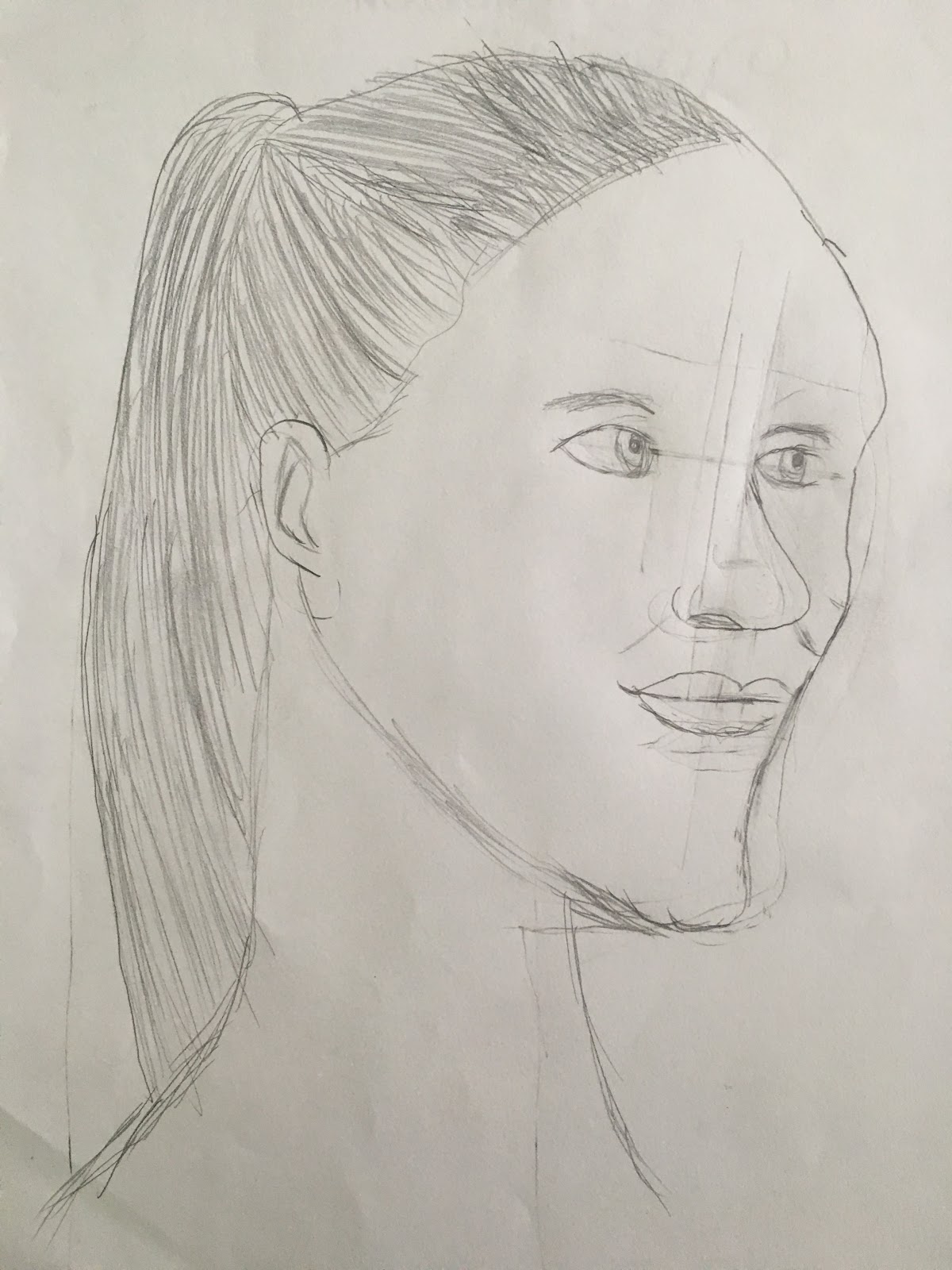
Following the rough outline that I displayed in the previous entry, I got to work on finishing the three-quarter perspective, and I’m pretty satisfied with how it turned out. Sure, it still somewhat resembles E.T’s dream date, but if we’re comparing it to my first face drawing, it’s definitely an improvement. It goes to show that proportion and drawing things just as you see them can go a good ways towards improving drawing ability.
Additionally, in Drawing on the Right Side of the Brain by Betty Edwards, I read about learning to shade objects, and the method that was brought up was cross-hatching, or drawing more lines crossing over each other to darken the shadowed areas. Surely, such a simple method could be easy to apply.
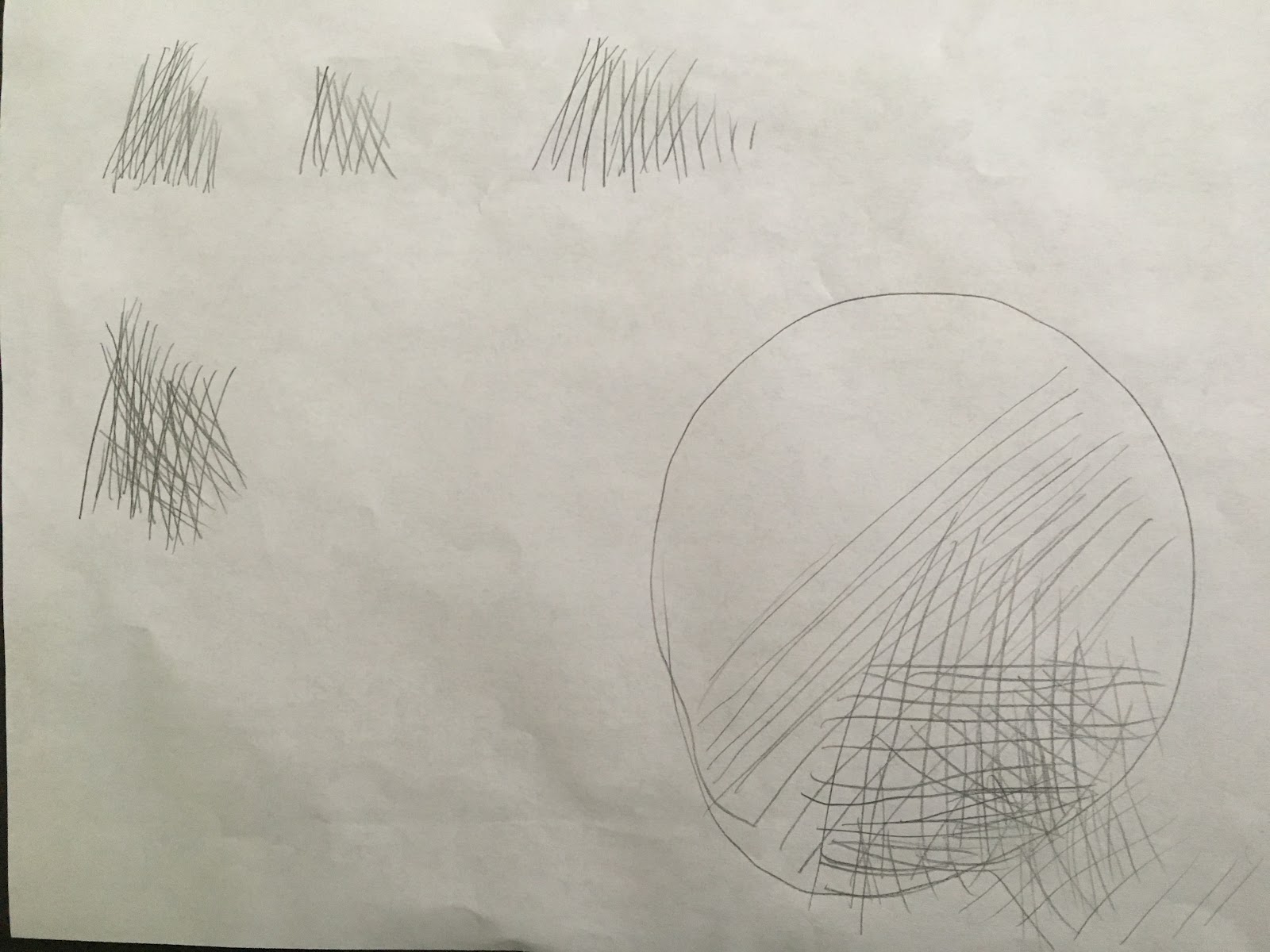 |
| First attempt at cross hatching. Yikes! |
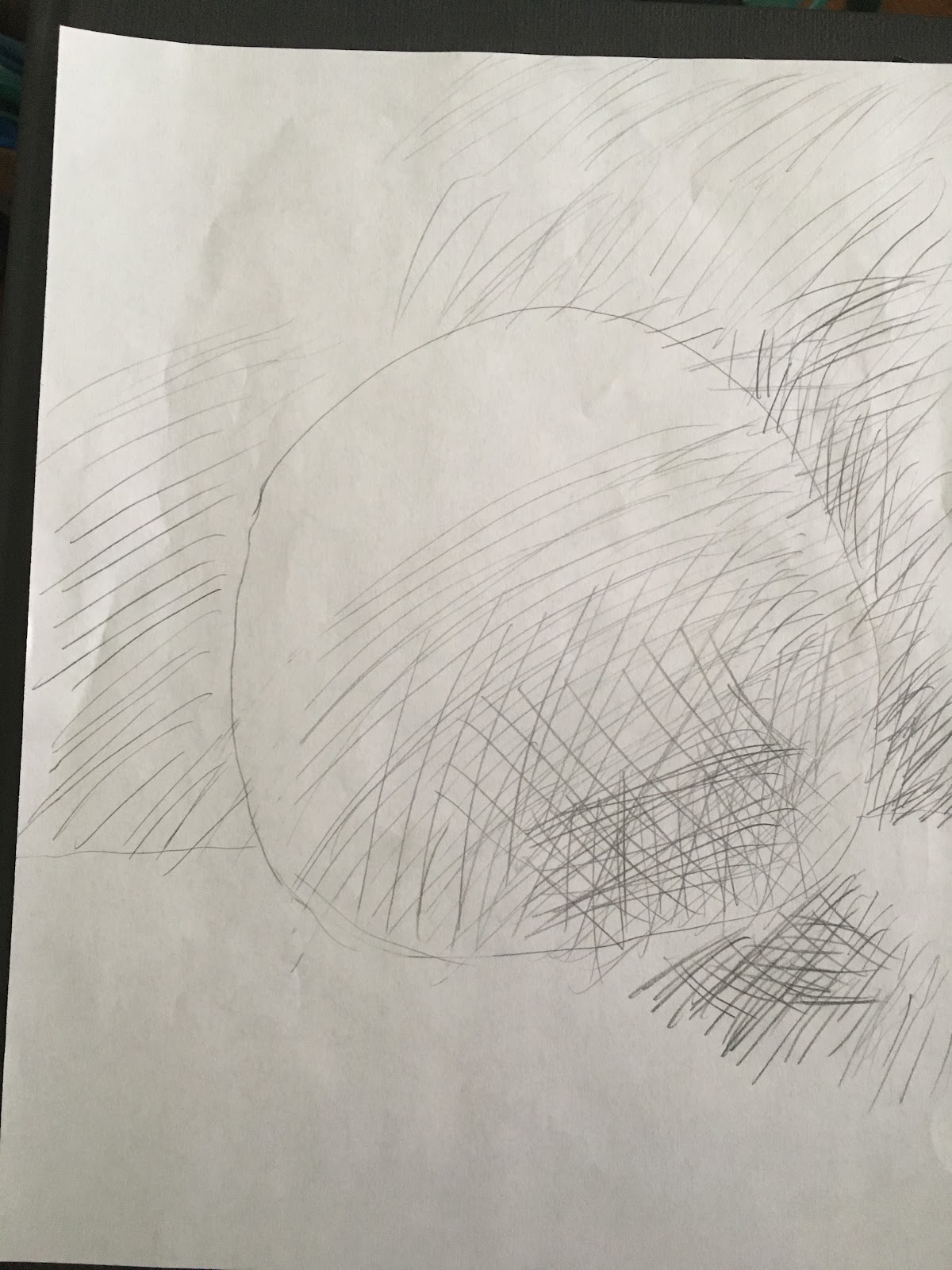 |
| Second attempt at cross hatching. Yikes! |
Okay, so very clearly, it’s gonna need some practice. It’s worth mentioning that these are first and second attempts, so of course they’ll look rough. Frankly, however, I think that simply resembling shading is a good start, as shown by the other steps forward that Drawing on the Right Side of the Brain takes you towards.
And that’s just about all the basic ideas that the book runs through. Once again, I cannot emphasize enough how important it is that these are only glances into the exercises that the book takes you through, and the type of improvement that you’ll want to see when reading through it. I haven’t even covered some of the more major topics that it goes over, such as properly drawing a side view of a head or using negative space in shading with an ink brush (the latter of which was somewhat difficult to do given my lack of proper ink on hand at the time. That’s more my fault). What I have covered only involves the basics of what this book goes into, and yet the improvement in just those basics is evident. I would highly recommend picking this up.
Moving aside from the book alone, working on this blog has really gotten me back into both drawing and art in general. I mainly stayed away due to a preconceived lack of talent in the area, but sharing my progress has taught me that quite literally anyone can draw. It doesn’t have to look incredibly realistic to look good, and it doesn’t have to be deeply thought-out to portray what you have on your mind. Granted, there is a correlation, but I had a lot of fun just learning to do what I stopped doing in elementary school.
As I say goodbye to my readers and my old classmates that are heading off to colleges across the country (and sometimes out of it, too), I leave this bit of advice: Don’t sell yourself short, telling yourself that something just isn’t your thing. Sure, it might not be, but you could be surprised at what you’re capable of. No matter how many mistakes you may see in the work that you do, there are probably just as many improvements that you made just by trying it. Nobody is perfect at what they do, but allowing yourself to try your hand may just show you that you could be.
This has been Ian, part-time artist, reporting from Gallery Clarendon, and I do hope that this blog has encouraged you all to try giving drawing a shot (or any new thing, really). Thank you for watching my progress with me, and take care.


